
Yiddish Culture Fund
Grants Awarded
Fall 2025
Recipient: Dylan Skolnick
$1,500 for Yiddish Culture Club at U.C. Berkeley
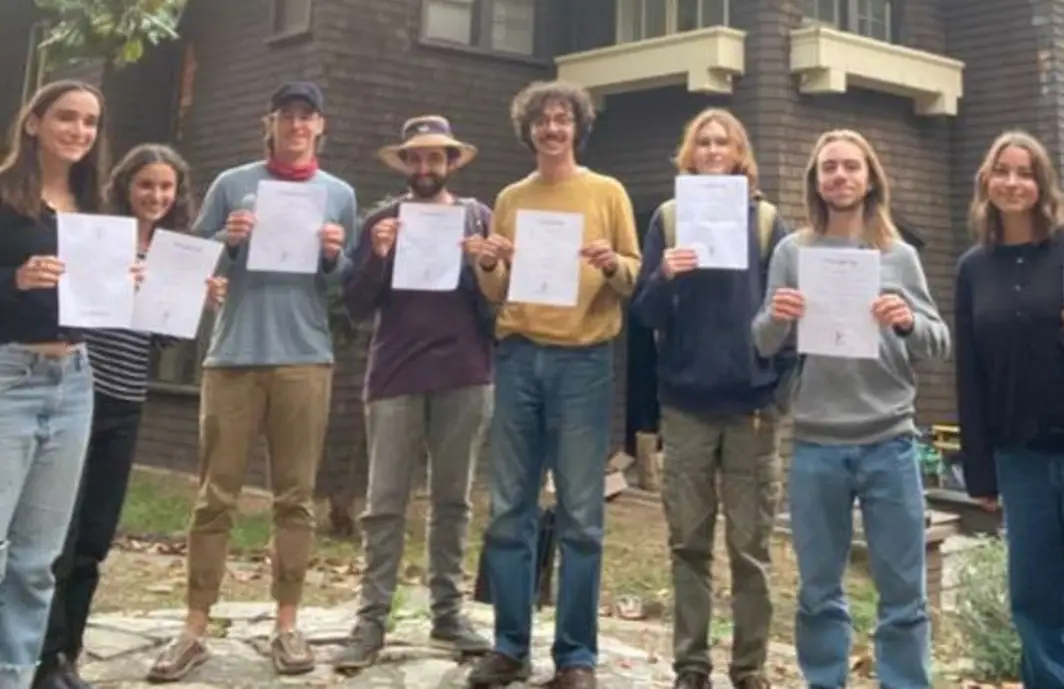
The Yiddish Culture Club is a student-run organization on the U.C. Berkeley campus. This grant supports the Club in Spring 2026, providing funding for bi-weekly meetings, Yiddish movie screenings, trips to off-campus Yiddish and klezmer events, and a special night of klezmer music and dancing. With each event, the Club aims to tell more and more people that Yiddish lives and to help enliven it even more!
Photo: “This picture is from when we made Yiddish birth certificates with our new Yiddish names after eating gefilte fish for the first time.” – Dylan Skolnick
Recipient: Ilana Goldberg
$2,305 for Komets Alef Oakland, free Yiddish classes
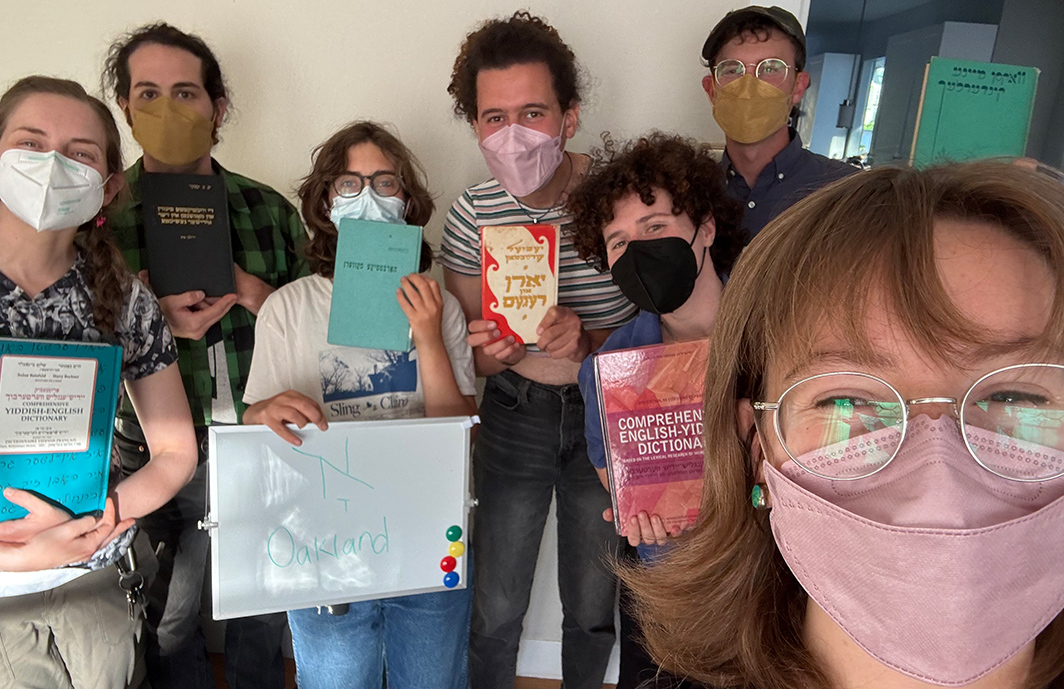
Komets Alef Oakland is a free, beginner Yiddish language series that will take place on Sundays in Oakland this Spring/Summer (location given upon registration). Class will be in-person with respirator masks required and provided.As of 1/23, spaces are still available! Register now at https://docs.google.com/forms/d/e/1FAIpQLSe-om49Zwa_27UM2S5X5ouKu3ofKuLetz2HcuhvK_cr39H3Sw/viewform
The three classes will be:
- An Alef-Beys (Jewish alphabet) workshop, including practice in both print and cursive letters. This workshop is appropriate for complete beginners, or for those looking to brush up their skills.
- Two levels of beginner Yiddish classes. Students are welcome to sign up for one or both classes, and students with prior knowledge may begin with the more advanced class. Exact subject matter will be determined by registration surveys.
To stay updated about dates and registration, please email Lehrerke (teacher) Lanke: igoldberg97@gmail.com
Recipients: Atid Kimelman, Eva Orbuch, Elaina Marshalek
$3,000 for Kol Retreat 2026
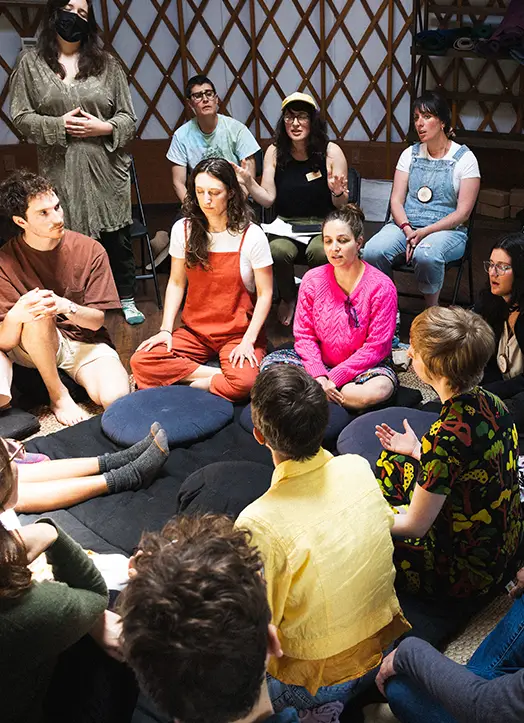
The 2026 Kol Retreat will be held May 1-2 at Urban Adamah in Berkeley. Kol, an annual retreat, includes a Kabbalat Shabbat service, over a dozen workshops, a participatory concert, and community song circles. Around 140 people participate in this event, which has been generously supported by The Yiddish Culture Fund. The 2026 Kol Retreat will once again bring together singers, musicians, dancers, and learners of diverse backgrounds and ages. Although Kol includes diverse Jewish musics, Yiddish/klezmer music and Yiddish/Hasidic dance workshops are key elements. Several paid teachers lead longer workshops and volunteer teachers lead shorter workshops. Some of the goals are to nurture connection to diaspora music, build community, and create musical and Jewish connections in the Bay Area. To be kept informed of the progress of this project, email kolretreatbayarea@gmail.com.
Recipient: Anshl Bodoni
$3,000 for Der Goylem: A Yiddish Puppet Spectacle

In Jewish legend, a golem (goylem, in Yiddish) is a clay figure brought to life by magic. This project is a workshop series this Spring to create a Yiddish-inspired puppet show. Those participating in the workshops will then present the show in a public venue.
What would you do…
… if you could summon a golem to fight the empire?
… if you were a golem, trying to survive for the long haul?
The old world is dying, and the new world struggles to be born; now is the time of…golems? Der Goylem marries the rich tradition of Yiddish puppetry with the practice of large-scale protest puppet theater. This performance will bring people together for much-needed joy, grief, play, rebellion, celebration, and participatory art. It will feature both Yiddish and English, as well as klezmer musical accompaniment. Der Goylem is by and for the trans and queer Jews of the East Bay, and it will carry themes of our often-marginalized stories.
All are invited to experience the performance in early May of Der Goylem! In the lineage of Cheap Art, it will be free to the public. Outdoors, masked, challah served. Expect debauchery, degeneracy, and garlic. Watch this page for upcoming information on how people can sign up to be kept informed of workshops and performance details.
Recipients: Ma’ayan Pe’er, Satchel Jacob Forrester, Max Alper
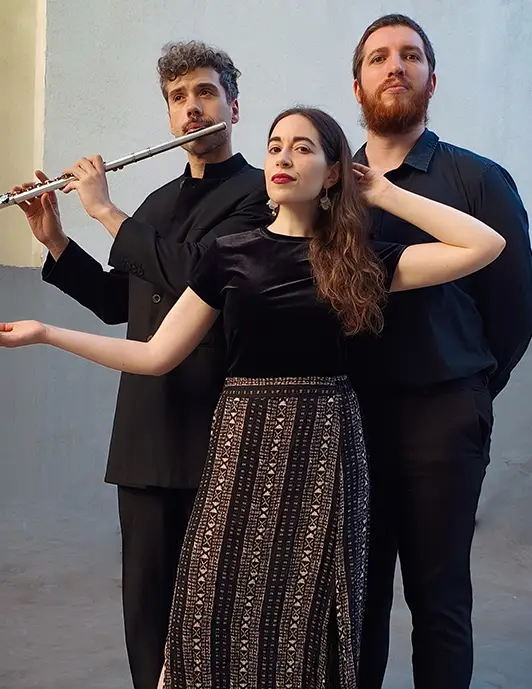
$2,000 for Intercambio en Yiddishlandia
Yiddish Culture Fund
Grants Awarded
Spring 2025
Recipient: Kaya Wurtzel
$1,816 for Tashnbukh
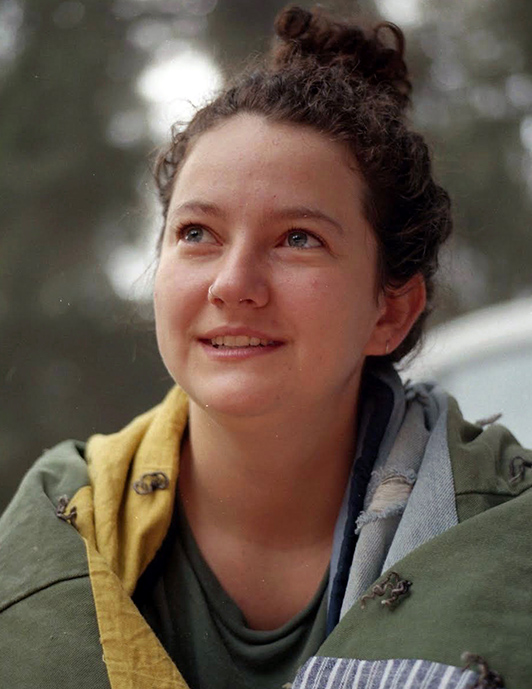
From historical practices in Yiddishland to more recent publications across the diaspora, books have allowed us to record and share stories about our lives, our communities, and the world around us. In Yiddish, Tashnbikher are literally pocket-sized books. Inspired by historical Yiddish bookmakers, Kaya will facilitate a local group of Yiddishists in writing and publishing zines to remember our histories, build culture where we find ourselves, and give voice to local and non-institutional, deviant Judaisms. Tashnbukh will meet for several months to study Yiddish print and publishing histories and then to publish a small collection of Yiddish (potentially language and/or culture) zines for our communities here in the Bay.
The group (which is full and no longer accepting applications) will start meeting bi-monthly for 4-5 months beginning in August.
Recipient: Ilana Goldberg
$2,475 to support Komets Alef Oakland, Yiddish Classes at two levels.
Komets Alef Oakland is a free, beginner Yiddish series that will take place on Sundays in North Oakland, location given upon registration. More info and registration for either level »
Level 101: Sundays, June 22 and 29, 10:30am-2:30pm
This course is for complete beginners; we will cover some basic history and principles of Yiddish language, reading (print), greetings and expressions, subject pronouns, present-tense verbs, and vocabulary of numbers, days, and foods.
Level 102: Sundays, July 20 and 27, 10:30am-2:30pm
This course is intended for those who have completed 101 or have a comparable level of Yiddish. We will practice writing (script), learn more nouns and verbs, and start to get into the stickier parts of Yiddish grammar (verb tenses, sentence structure, object pronouns, and more).
Both levels will involve an ample amount of conversation practice, singing and snacks!
Access information
A safe wellness environment is assured, and accommodations will be provided upon request. More info and registration for either level »
Recipient: Sacred Music Fellowship
$1,500 to support a 3-part series of Sacred Music Sessions on Yiddish song and klezmer music, to be offered in fall 2025
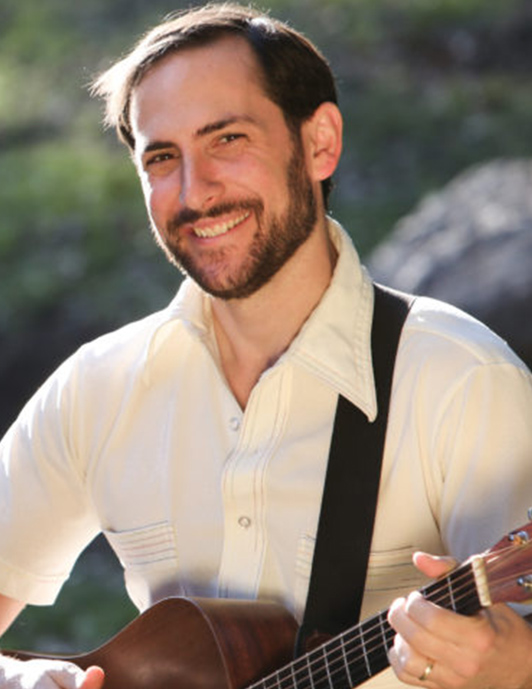
Sacred Music Fellowship will organize a three-month series in the East Bay focused on Yiddish song and klezmer music. Held monthly as part of our ongoing Thursday night Sacred Music Sessions, these participatory sessions will feature young, local tradition-bearers teaching songs, stories, and instrumental music to celebrate and sustain Yiddish culture. Organized by Berkeley-based songleader Ben Kramarz, this series invites people of all backgrounds to connect through Yiddish and klezmer music, and will be held in partnership with local Jewish institutions.
Recipients: Atid Kimelman, Aaron Goldstein, Binya Koatz, Michael Tal, Ilya Kremer, and Daniel Goldberg
$1,500 to support Borscht Bay, the second-ever Nitl Nakht (Xmas eve) Yiddish Vaudeville revue in Oakland
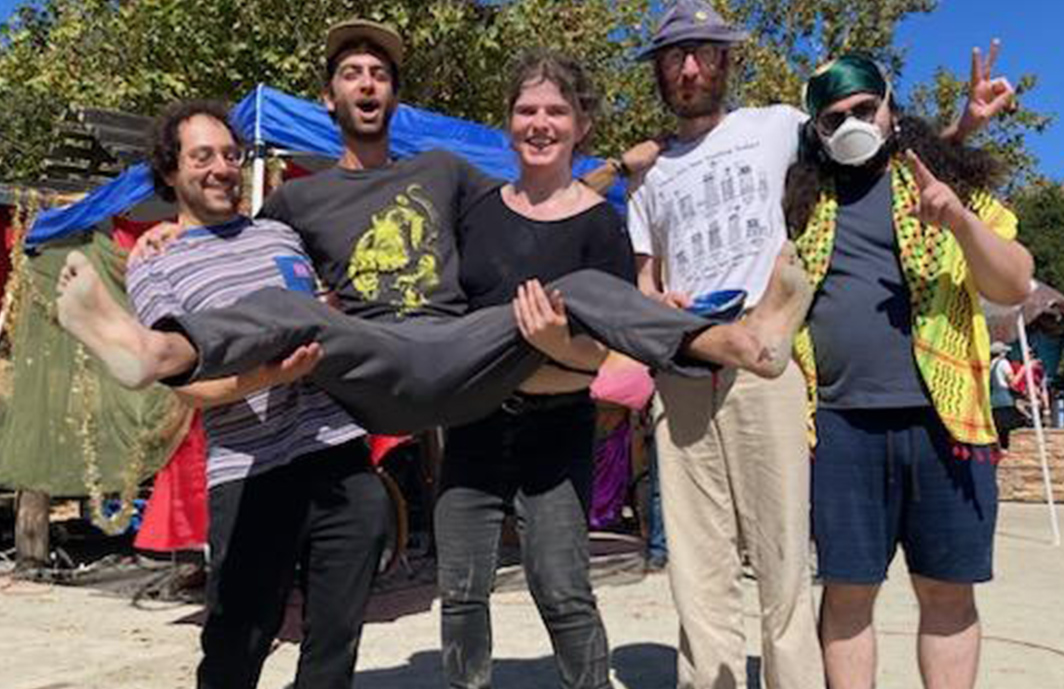
Nitl Nakht will feature a stacked lineup of klezmorim, schtickers, Yiddish storytellers, and deviants of all descriptions, plus many special guests and surprise performers. MC’d by everyone’s favorite, the inescapable Auntie Semitism. Dance, drink, schmooze. Wednesday night, December 24, 2025, 8pm ‘til late. Location TBD.
To learn more about the event, follow https://www.instagram.com/krekhts/ or email krekhts@gmail.com to be added to the mailing list.
Yiddish Culture Fund
Grants Awarded
Fall 2024
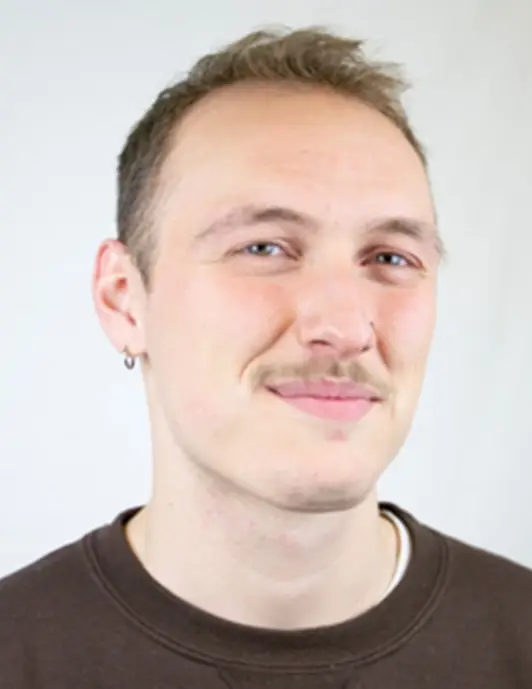
Recipient: Micah Benjamin Wilson
$1010 to support The Zamler Collective: Yiddish Oral History Workshops, January - June 2025
Inspired by the zamlers (collectors) of Eastern Europe, ordinary people who gathered folktales, songs, proverbs, and other historical Yiddish culture, Micah will recruit a small group of Yiddish history enthusiasts and then guide and support them to record oral histories in the Bay Area. Over the course of several months, they will learn effective techniques through monthly workshops featuring guests on Zoom from the Yiddish Book Center, YIVO, and the Jewish Zine Archive. Each participant will choose a project whose focus may be on language, art, genealogy, or literature, interviewing an older member of the Yiddish speaking or Yiddish cultural community. Collectively, they will prepare a public presentation of their discoveries and produce a podcast or audio documentary to share with the broader public.
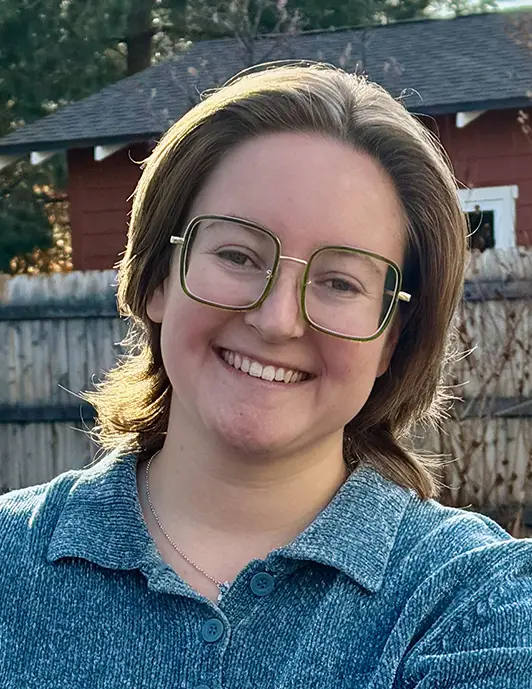
Recipient: Ilana Goldberg
$780 to support Komets Alef Oakland:
Beginner Yiddish Classes in the East Bay, March 5 - May 21, 2025
The grant will support a free, beginning Yiddish course of six weekly, 75-minute sessions held at Moishe House Oakland (in Rockridge). The course will include the history and linguistic background of Yiddish, alef-beys, greetings, pronouns, regular and irregular verbs, vocabulary and songs, plus discussions on the “why” of learning Yiddish and what it means to be part of a Yiddish-speaking community. Ilana brings with her successful experience as a second language teacher in several community organizations. She is a student of applied linguistics at San Francisco State University and aspires to spread her enthusiasm for Yiddish language and culture. Course registrations have reached the capacity of the venue so no more are being accepted.
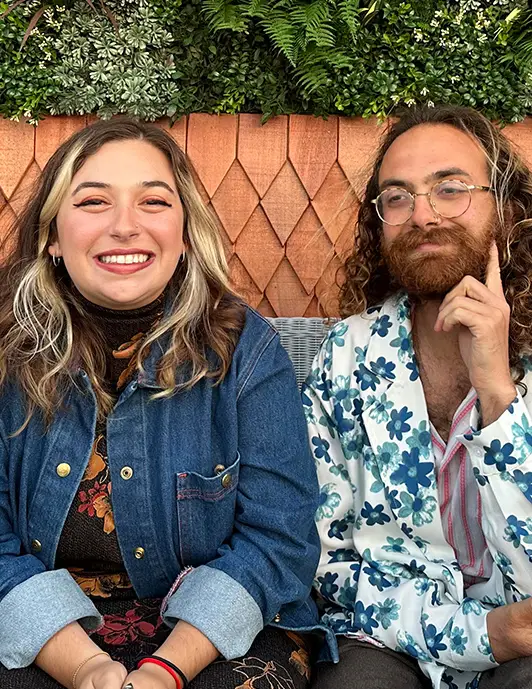
Recipients: Liza Gak and Justin Becker
$1050 to support Noshing on Do-i-kayt:Building Community and Exploring Diaspora through Yiddish Food, Song, and Tradition, March 2025
The grant will support an intergenerational, participatory cultural experience in San Francisco that embodies do-i-kayt (here-ness, in Yiddish) through communal reflection and exploration of Yiddish song and dance, Jewish food, and klezmer music. In the early 1900s, the Jewish Labor Bund championed the concept of do-i-kayt. Bundists emphasized engaging with immediate struggles in their local communities in Lithuania, Poland and Russia . Liza and Justin believe people need community space to discuss urgent and timely issues through the lens of do-i-kayt, which can be an interesting introduction to Yiddish history and culture.
The event will begin with participants gathering in a circle, sharing an artifact they have brought that relates to their connection to Yiddish culture, followed by a reflective discussion of their ancestry, Yiddish culture, and do-i-kayt in the Bay Area. They will then cook a meal together to the sound of live klezmer music and explore Yiddish poetry, song, dance, eating and socializing. Liza’s and Justin’s goal is to bring together people in the Bay Area who are searching for community and connection to Yiddish culture.
Register HERE.
Yiddish Culture Fund
Grants Awarded
Spring 2024
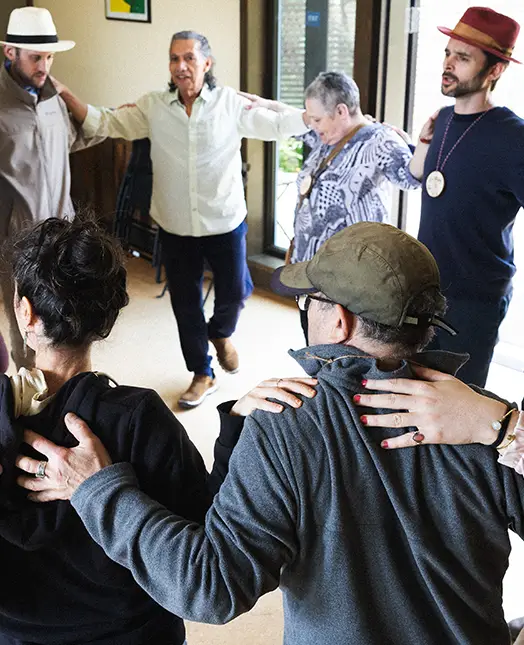
Recipients: Organizers in their 20s through 60s: Mike Perlmutter, Sarah Wolfman-Robichaud (JCC East Bay staff), Zina Pozen, and Bruce Bierman
$3,000 to support the series Joy of Jewish Music and Dance Nine monthly events September 2024 - May 2025, Sunday afternoons
The grant from the Yiddish Culture Fund will help grow and sustain the Joy of Jewish Music and Dance series, with 9 new, monthly events. All sessions will be at the Jewish Community Center of the East Bay (JCC East Bay) and are open to instrumentalists (of any skill level), dancers, and audience members.
Each session offers opportunities for playing instruments and dancing. In the first hour, participants choose between dance or music instruction. Then participants come together for a dance party based on the dances and tunes taught earlier. The third hour may feature additional music instruction and or jamming. Breaks allow participants to nosh and kibits. The five programs in Spring 2024, which attracted all generations, kids to seniors, were supported by a $1,500 grant from TYCF.
Recipients: Atid Kimelman (33) and Eva Orbuch (35), on behalf of Kol, an unincorporated association
$3,000 to support Kol: A Retreat for Jewish Music Across the Diaspora
Spring 2025
The 2025 Kol Retreat will be held May 9-11 at Urban Adamah in Berkeley as a followup to similar events in Fall 2022 and Spring 2024 at Urban Adamah (and a smaller, one-day event in Spring 2023 at Moishe House in Berkeley), all of which were completely filled with young Jews. The Spring 2024 retreat included a Kabbalat Shabbat service, 20 workshops, a participatory concert, and two community song circles. Around 140 people participated in this event, which was supported with a $1,500 grant from The Yiddish Culture Fund. The 2025 Kol Retreat will once again bring together singers, musicians, dancers, and learners of diverse backgrounds and ages. Although Kol includes diverse Jewish musics, Yiddish/klezmer music and Yiddish/Hasidic dance workshops are key elements. Several paid teachers teach longer workshops and volunteer teachers teach shorter workshops. Some of the goals are to nurture connection to diaspora music, build community, and create musical and Jewish connections in the Bay Area.
Recipients: Freygl Gertsovski (36), Asa Brunet-Jailly (23), Sarah Schneider (36) for a joint initiative by Rad Yiddish (Canada) & Queer Yiddish Camp (U.S.)
$1500 to support Queer Yiddish Camp, including special outreach to the S.F. Bay Area
November 3 -17, 2024 https://queeryiddish.camp
Queer Yiddish Camp is an online Yiddish language and cultural intensive organized by Rad Yiddish, a group of young Yiddishists from the U.S. and Canada. The event, modeled after their first camp in 2022 will include multilevel Yiddish classes, culture and history classes, and dance and vocal classes, all interactive, with multiple guest faculty members and provided with Yiddish ASL. This year they hope to introduce CART captioning to make their classes even more accessible. While originally designed to reach the LGBTQ community, the programs are for everyone. The proponents will make special efforts to recruit participants from the San Francisco Bay Area.
In the four years since its inception, Rad Yiddish has put on dozens of accessible online Yiddish events attracting hundreds of participants, including shmueskrayzn (conversations), zingerayn (song sessions), film screenings, game nights, literature reading and discussion circles, and more, which they continue to offer year-round.
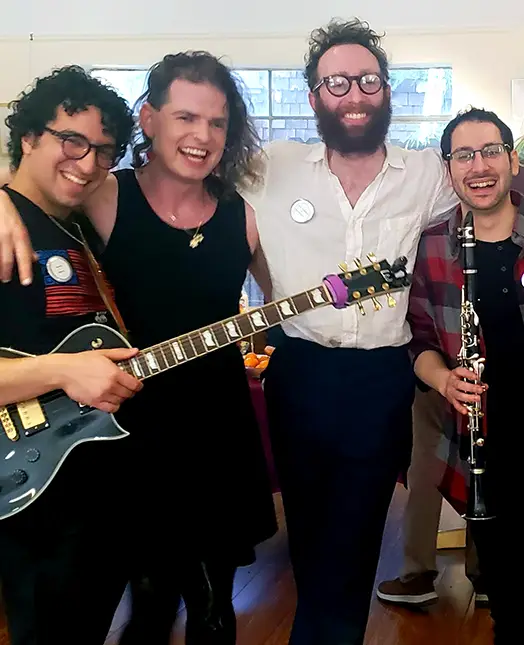
Recipients: Binya Koatz (29), Aaron Goldstein (31), Atid Kimelman (33)
$750 to support Borscht Bay Cabaret Fall 2024
Borscht Bay was a Yiddish Cabaret led by the next generation of Yiddish and klezmer creatives. The sold-out, outdoor event on 12/24/24 featured musicians, comedians, and Yiddish performances of all kinds, capped off with a dance party featuring a live klezmer band. The event celebrated a resurgence of local, Yiddish cultural creativity, continuing the legacy of the Yiddish cabaret culture of our ancestors.
Yiddish Culture Fund
Grants Awarded
Fall 2023
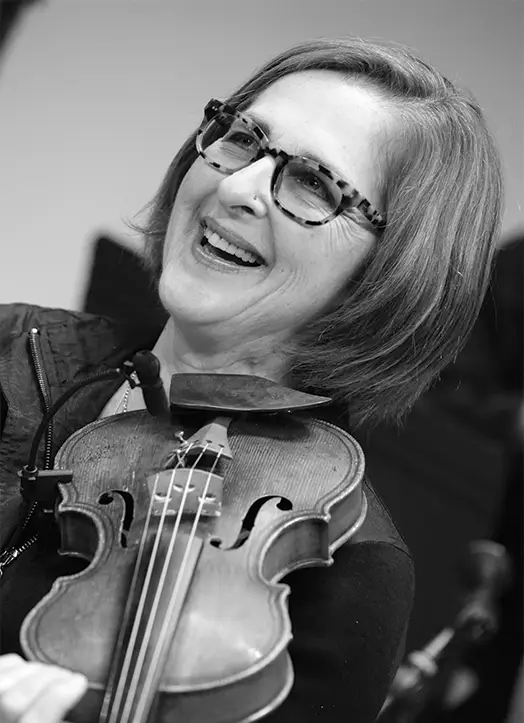
Recipient: Cookie Segelstein
$1,500 to support Under the Hood: Using Jewish Archival Materials to Create New Music and Arrangements, and New Old Klezmer Jam
Sunday, December 10, 3pm Pacific Time (in person), and January 28, 3-5pm (see Event Directory)
Calliope-EBMA.org
This two-part program consists of:
- Under the Hood: Sunday, December 10, 3pm, a 30-minute talk with violinist/violist, scholar and teacher Cookie Segelstein, will explore ways musicians can balance old-school research and learning with digital resources. How does Veretski Pass use Jewish archival collection materials to compose and arrange new music? This presentation shows their creative process, from gathering materials, to the treatment of the smallest melodic fragments, to using whole melodies. Cookie will show elements of this, including music sources, tempo and key treatments, melodic and rhythmic variations. This event requires a ticket to the immediately-following concert by the Veretski Pass ensemble in the Calliope East Bay Music and Arts at Saint Alban’s Church in Albany, which will include works created through this process.
- New Old Klezmer Jam, Sunday, January 28, 3-5pm PT, a jam session/play-along using these archival materials, with Jewish/klezmer melodies that are not in the general klezmer repertoire. Presented by Calliope, co-presented by KlezCalifornia and the San Francisco chapter of the California division of the American String Teachers Association. This event is in person and streamed.
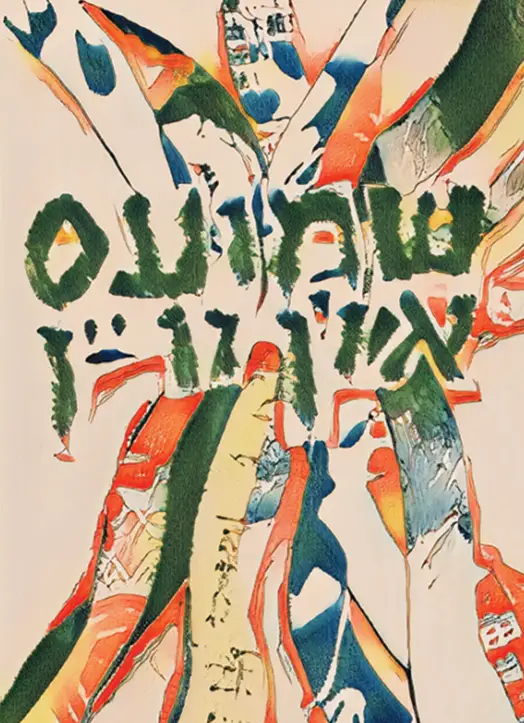
Recipient: Jake Schneider
Sunday, January 7, 11am Pacific Time (online)
https://jakeschneider.eu/shmues-un-vayn/
“A language doesn’t die because those who don’t know it don’t learn it, but because those who know it don’t speak it.” –Basque proverb
Yiddish is a living language and Yiddish education is thriving, especially since the rise of Zoom made it accessible worldwide. But outside of Hasidic communities, speakers have few opportunities for a face-to-face conversation these days.
One exception is Shmues un Vayn, a Yiddish social club affiliated with the Yiddish.Berlin collective. The grassroots group meets two nights a month at Berlin bars, galleries, and parks over a glass of wine or beer. The only rule at these informal gatherings is to speak only Yiddish. In less than two years, the group has met more than forty times so far, attracted 89 members, and even organized satellite meetups in Kraków, Warsaw, Tel Aviv, and New York.
This online presentation and workshop, in English, with the club’s gabay Jake Schneider will delve into the practical details of starting and maintaining a sustainable ponim-al-ponim Yiddish social club and share lessons that you can adapt to your own local context. Using the Berlin group as a case study, we will talk about formats, outreach, promotion, roles, sustainability, and issues around language skills—with plenty of time for questions. The goal is to give you the tools you need to cultivate an active Yiddish-speaking community wherever you live. The workshop video will be posted to KlezCalifornia’s website hoping to inspire young people in the S.F. Bay Area and beyond.
Recipients: Mike Perlmutter, Bruce Bierman, Zina Pozen, and JCC East Bay.
$1,500 to support a new series, The Joy of Jewish Music and Dance
Sundays, January 28, February 25, March 24, April 21, May 19, 1-4pm Pacific Time (in person)
A new series for Jewish instrumental music and dance will be held at the JCC East Bay. During the first hour, participants will learn klezmer music technique or Yiddish dance. Participants will all come together for the second hour for a dance party focusing on the dances and tunes taught in the prior hour. The third hour will be an informal music jam. One of the five dates will be for music and dance other than klezmer/Yiddish. This new series is also an opportunity to meet, shmooze, and network, or simply take in the beauty and goodness of these traditions. There will be a sliding scale admission fee for each event; no one turned away for lack of funds. Registration information is at https://jcceastbay.org/events/the-joy-of-jewish-music-and-dance/
Recipients: Liv Kunins-Berkowitz and Kaya Wurtzel
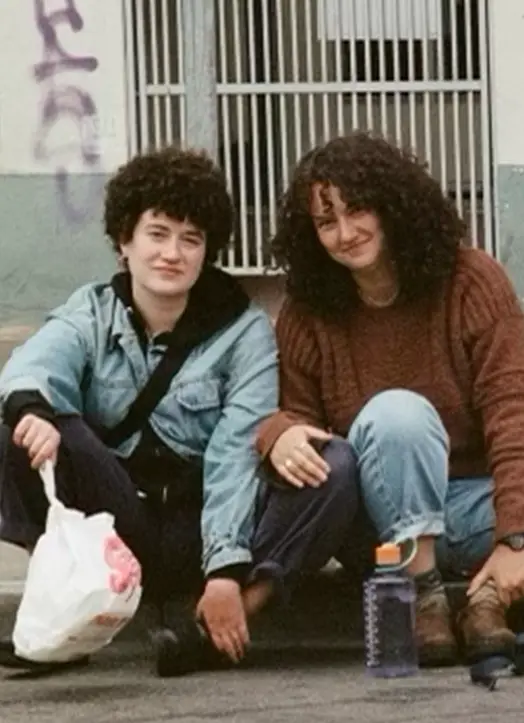
Grant: $500 to support Nosh: A Performative Feast, now renamed Mame-loshn
Saturday, March 16. This event is already full.
Mame-loshn is an intimate pop-up dinner in Oakland intended to celebrate the Yiddish language, uplift Ashkenazi foodways, and facilitate community. Yiddish will be integrated into this meal in three specific ways. First, the feast will include riso printed menus which feature Yiddish. Additionally, Kaya will create a tablecloth, a “text-ile,” in which the Yiddish words for the components of a place setting will be printed onto the very fabric of the table. This tablecloth will carry this first feast to future dinners, holding stains as memory on top of its original text. Finally, Liv will create a soundscape to serve as the backdrop to the meal which will include Yiddish music.
While this feast integrates the Yiddish language into the dining experience, it also uplifts the non-verbal languages that we use to pass on tradition and identity including food and art. Kaya and Liv conceived of the menu, which will be based on the staples of the Jewish delicatessen (pastrami, rye, pickles, bialys) through extensive conversation with their grandparents about their childhood food memories. Instead of payment, each guest will be asked to have a conversation with an elder in their family about their food memories. There will be a part of the meal where guests will all share from their conversations. This participatory art experience dwells at the intersection of the permanent and the ephemeral. Indeed, the experience will be unique and the food will only last a short while, but the menus, tablecloth, and photos of the event will endure. This tension sheds light on the very process of cultural preservation in which fragments both are lost and remain.
Following the initial dinner, Liv and Kaya will create an exhibit which will feature the tablecloth, menus, and photographs so that a larger public can interact with this event. They dream of hosting these dinners regularly to bring together a group of people to share in Yiddish language and culture.
Recipients: Atid Kimelman and Elan Loeb
$1,500 to support Kol: A Retreat for Jewish Music Across the Diaspora
May 10-12, 2024
https://www.kolretreat.org/
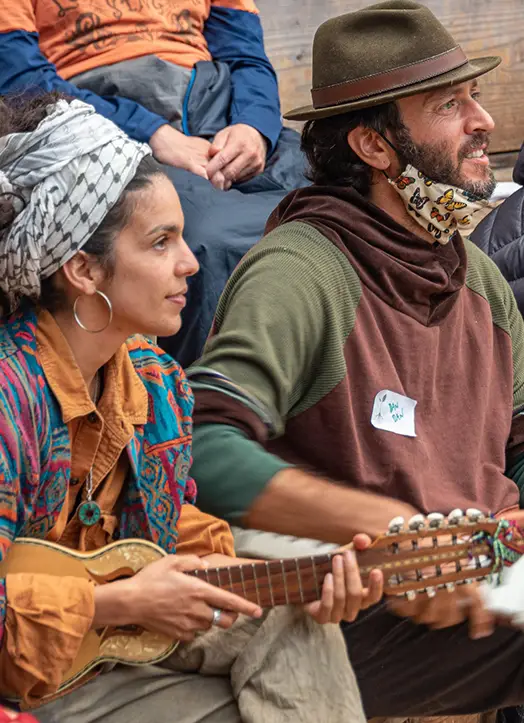
Kol is a 3-4 day Jewish music retreat to be held in the East Bay May 10-12. This event will bring together singers, musicians, and learners of diverse backgrounds and ages to explore both ancestral and modern Jewish music. Yiddish/klezmer music and dance workshops are key pieces of the event. Several paid teachers will teach longer workshops and volunteer teachers will teach shorter workshops. Some of the goals are to nurture connection to diaspora music, to build community, and create musical and Jewish connections in the Bay Area. Their two events in the past year were completely filled with young Jews.
Recipients: Raye Holab, Ben Sweet, Daniel Siegel, and Staenberg-Loup JCC in Denver
$500 to support KlezKolorado
DATES CHANGED TO FRIDAY, MAY 17 – SUNDAY, MAY 19 (in person and online)
https://www.jccdenver.org/portfolio-items/klezkolorado/
KlezKolorado is a new weekend-long klezmer festival, at the Staenberg-Loup Jewish Community Center Ranch Camp located an hour outside Denver that includes local and national klezmer acts, Yiddish culture, workshops, and Colorado’s Jewish community, creating a new space for Yiddishists to gather and celebrate our culture. There will be workshops on klezmer musicianship, Yiddish language, queer/leftist Jewish activism and history, yoga, Alexander technique for Klezmer musicians, dance and art. The organizing team is composed entirely of LGBTQ+ individuals in their twenties and thirties.
Most Yiddish culture intensives are on the East Coast, and the hours are difficult for West Coast remote participation. The grant will subsidize the costs of streaming the festival so S.F. Bay Area residents can participate.